Are gutter guards worth it? An honest look at the types
By Grazen Services, Cary, NC · Updated November 2026
The short answer
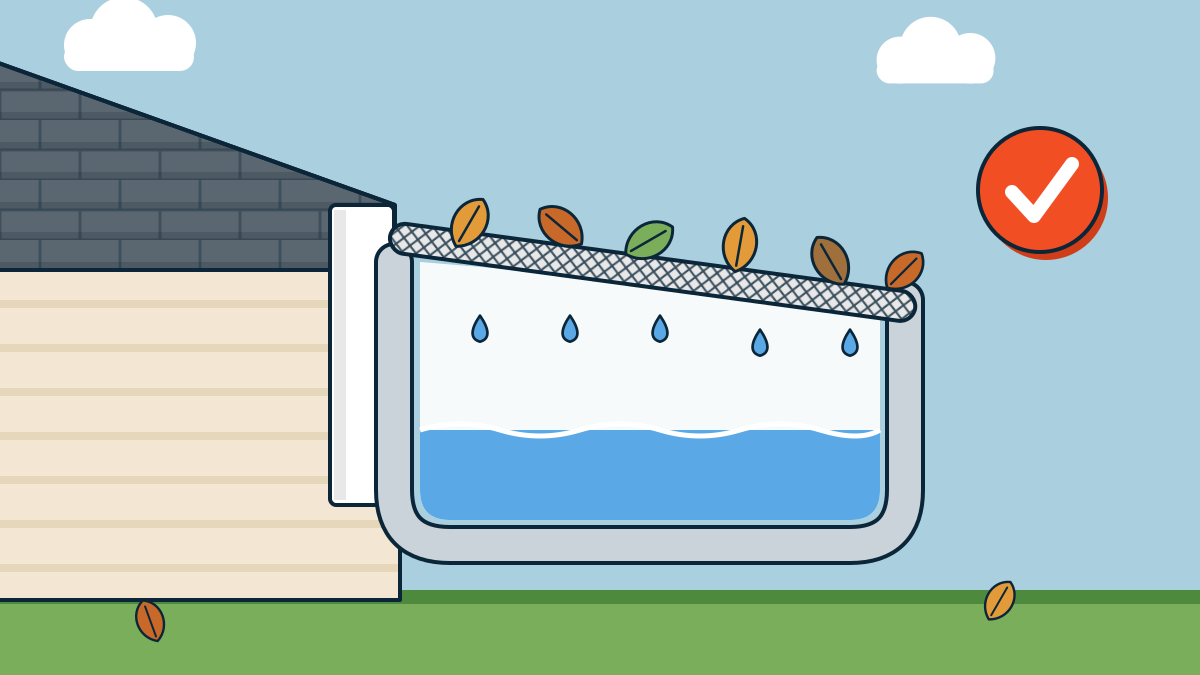
Gutter guards are worth it for some homes, mainly those with heavy tree cover or tall roofs that are hard to reach. They cut down on how often you clean, but no guard is maintenance free. Pine needles, pollen and shingle grit can still build up, so plan on an occasional check.
The main types, and how they differ
- Screens: a flat or slightly curved metal or plastic sheet with holes. Cheap and simple. Big leaves stay on top, but pine needles can poke through the holes and small debris can get in.
- Micro-mesh: a very fine screen, usually on a rigid frame. It blocks most small debris, including needles and seeds. Fine dust, pollen and grit can still sit on top and form a film.
- Reverse-curve (hooded): a solid cover that curves over the gutter edge. Water clings to the curve and drops into a slot, while leaves slide off. Heavy rain can overshoot, and debris can still catch in the slot.
- Foam or brush inserts: foam blocks or bristle tubes that sit inside the gutter. Easy to install, but debris can collect on top and in the foam, and they can be hard to clean.
What guards do and don't stop
Most guards do a good job with big leaves and acorns. Pine needles are the tricky part in the Triangle, since they are thin and can slip through wide openings or lie flat and mat on top. Fine mesh handles them better than basic screens.
Pollen is very fine, so no guard stops it completely. In spring it washes into gutters or rests on top of the guard, and rain usually rinses much of it away. Shingle grit, the sandy granules that wear off a roof, can also build up in the gutter or on a mesh surface over time.
The honest pros and cons
- Pro: far fewer cleanings, and fewer trips up a ladder
- Pro: fewer overflows during heavy storms, which protects fascia and landscaping
- Pro: helpful on tall roofs or second stories that are hard to reach
- Con: they cost money up front, and a cheap guard installed poorly can cause more trouble than none
- Con: they still need an occasional cleaning, usually once a year, and sometimes the guard has to come off to reach what is underneath
- Con: on a low pitch or under heavy pine cover, some guards can clog on top and shed water over the edge
Who they make sense for
Guards usually make the most sense if you have big oaks or other hardwoods over the roof, you have a two-story home, or you simply don't want to clean gutters every year. If your house has little tree cover, regular cleanings may cost you less than guards ever will.
If pines hang over your roof, a fine mesh or well-fitted hooded style tends to hold up best, but expect to rinse or brush the top a few times a year.
When to call a pro
Guards work best when they fit your gutters and your roof. If you're thinking about guards, or you already have some and water is still spilling over, we can take a look. We clean gutters and install gutter guards across Wake County, and we'll tell you honestly whether guards make sense for your trees and your roof. Get a free quote and we'll reply within 24 hours.
Gutter guardsCommon questions
Do gutter guards mean I never have to clean my gutters again?
No. They reduce how often you clean, but pollen, needles and grit still build up over time. Checking them about once a year is a good habit.
Which type of gutter guard is best?
It depends on your trees. Fine micro-mesh handles small debris like pine needles better than basic screens. Hooded styles shed leaves well but can overshoot in heavy rain. Foam and brush inserts are the easiest to install but often the hardest to keep clean.
Can gutter guards cause problems?
Poorly fitted guards can trap debris on top, push water over the edge, or hold moisture against the shingles. A good fit and a yearly check prevent most of that.
Can I put guards on my existing gutters?
Usually yes, as long as the gutters are in good shape and sloped to drain. Clean them out and fix any sagging or loose sections first, so the guards sit flat.