How often should you wash your house in North Carolina?
By Grazen Services, Cary, NC · Updated November 2026
The short answer
Most homes in the Triangle do well with a house wash about once a year. Shady lots, homes near woods, and north-facing walls may need it more often, while sunny homes with little tree cover can often go longer. Late spring, after pine pollen season, is a popular time.
Signs it's time
- Green or black streaks on the siding, especially on the north side
- A yellow-green film after pollen season that doesn't rinse off with rain
- Dirt splashed up along the bottom few feet of the walls
- Spider webs and wasp nests under the eaves and around lights
- You're about to paint, sell or have photos taken of the house
What changes how often you need it
- Shade: the less sun a wall gets, the faster algae and mildew grow back
- Trees: pines and hardwoods add pollen, sap and debris
- Sprinklers that hit the siding keep it damp
- Light colored siding shows dirt sooner
- Clogged gutters that overflow streak the walls below
The best time of year
Late spring is popular because the heavy yellow pine pollen in April is done, and a clean house stays clean through summer. Fall works well too, before the holidays. Avoid washing when temperatures are near freezing, because water can freeze on walkways and in cracks.
Want it done for you?
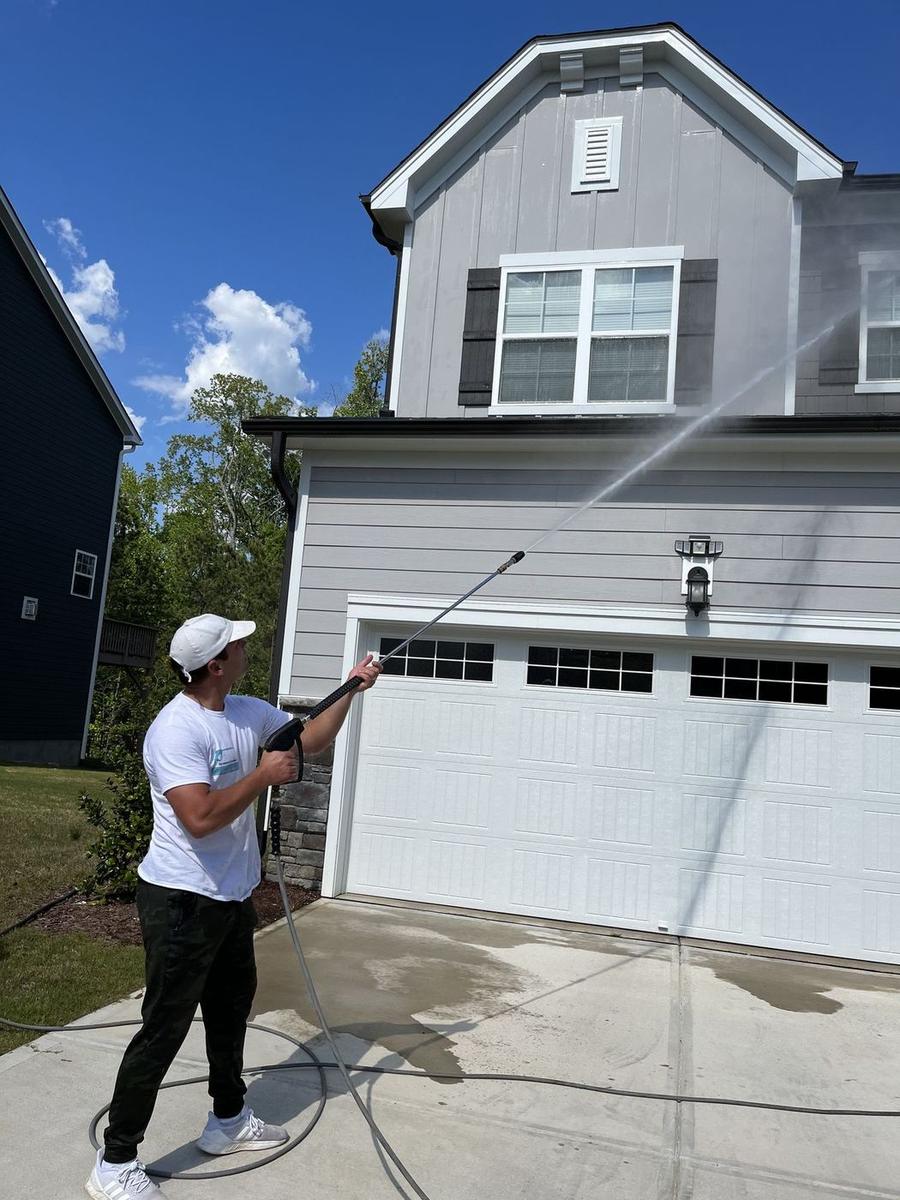
We wash homes all over Wake County using a low-pressure soft wash that's safe for siding and paint. Request a free quote and we'll reply within 24 hours. Every job is backed by our Redo-It-Free guarantee.
House washing in Wake CountyCommon questions
Does washing my house help the paint last?
Removing dirt and mildew keeps them from breaking down the finish over time, so a clean house generally holds its paint better than one left dirty for years.
Should I wash my house before painting?
Yes. Paint sticks best to a clean surface, so most painters want the house washed first.
Can washing damage my house?
Too much pressure can crack siding, strip paint or push water behind panels. A low-pressure soft wash avoids that. See our guide on power washing vs soft washing.