Power washing vs soft washing: what's safe for your siding, deck and driveway?
By Grazen Services, Cary, NC · Updated November 2026
The short answer
Power washing uses high-pressure water to blast dirt off hard surfaces like concrete and brick. Soft washing uses low pressure and a cleaning solution to kill algae and mildew, and it's the safer choice for vinyl siding, painted wood and roofs. Too much pressure on siding can crack it, strip paint or push water in behind it.
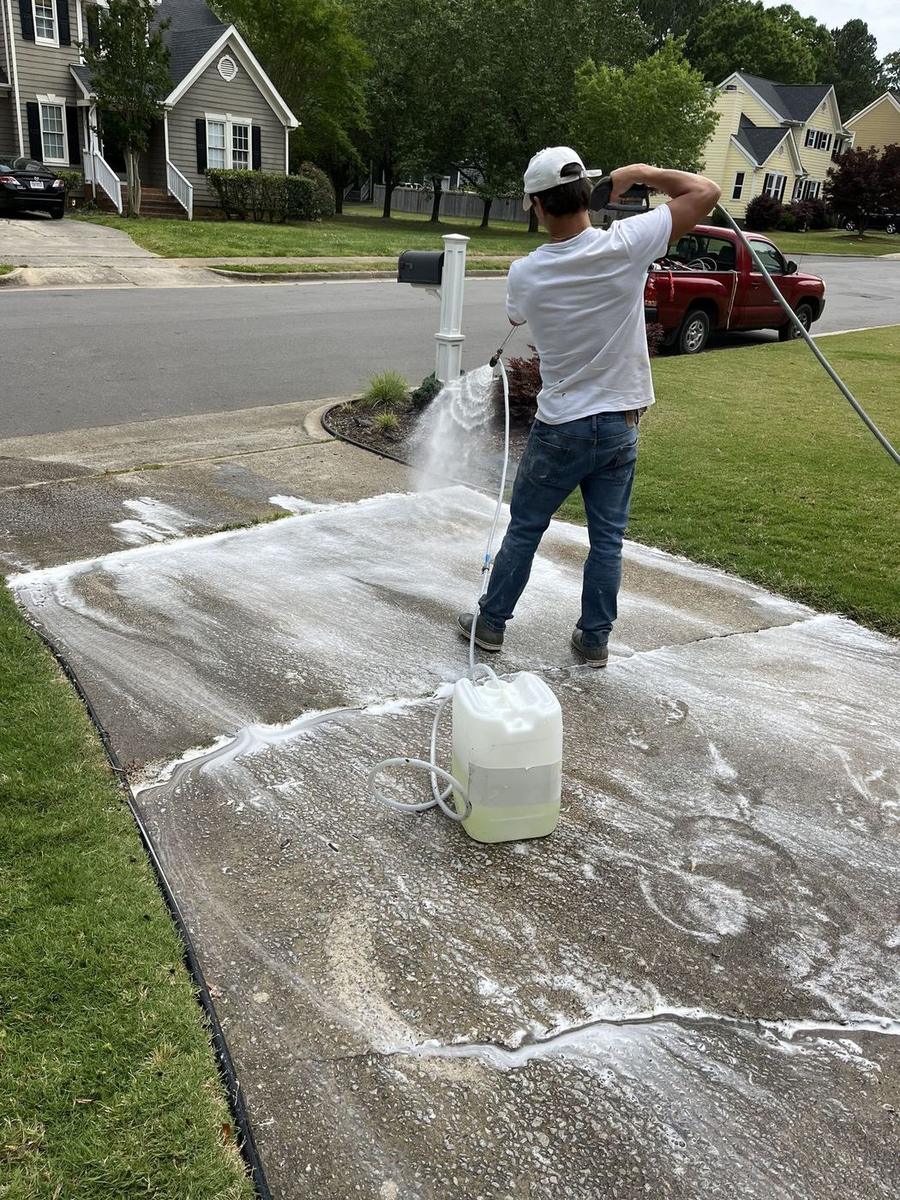
What's the difference?
Power washing (also called pressure washing) relies on the force of the water. It's the right tool for hard, tough surfaces where dirt is stuck on, like a concrete driveway.
Soft washing relies on the cleaning solution instead. The water pressure is about what you'd get from a garden hose. The solution kills the algae, mildew and mold that cause green and black streaks, then it gets rinsed off. Because nothing is being blasted, it's gentle on siding, paint and shingles.
Which one to use on each surface
- Concrete driveways and sidewalks: power washing, ideally with a surface cleaner so the finish is even with no stripes
- Vinyl siding: soft washing. High pressure can crack panels and force water behind them.
- Painted wood and trim: soft washing, so the paint stays on
- Brick: low to moderate pressure. Too much can wear away the mortar between bricks.
- Wood decks and fences: low pressure. High pressure splinters and gouges the wood.
- Roof shingles: soft washing only. Pressure knocks off the granules that protect the shingles.
- Windows: low pressure. A strong stream can break window seals.
Why North Carolina homes get green and black streaks
Our humid summers and shady lots are perfect for algae and mildew. It usually shows up first on the north side of the house and anywhere trees keep the siding from drying out. Rinsing it with plain water, even at high pressure, often leaves the roots behind, so it grows back fast. That's why siding is soft washed with a cleaning solution instead.
Common do-it-yourself mistakes
- Using the narrowest, most powerful nozzle tip on siding or wood
- Holding the wand too close to the surface
- Spraying upward under the laps of vinyl siding, which pushes water behind it
- Letting cleaning solution dry on the surface in direct sun
- Forgetting to soak plants with water before and rinse them after using a cleaner
- Using household bleach too strong, which can harm plants and fade surfaces
When to call a pro
If your house is two stories, the streaks keep coming back, or you'd rather not risk damaging siding or wood, it's worth having it done. We power wash and soft wash homes across Wake County, including house washing, driveways, sidewalks, brick, decks and fences, and we use the right pressure for each surface. Every job is backed by our Redo-It-Free guarantee.
Power and soft washing in Wake CountyCommon questions
Can I pressure wash my vinyl siding?
You can at low pressure with a wide spray tip, spraying down and away from the seams. Soft washing is safer and works better on algae and mildew because it kills them instead of just rinsing the surface.
Will soft washing hurt my plants?
The cleaning solution can harm plants if it sits on them. The usual practice is to soak plants with plain water before washing and rinse them again afterward.
Is power washing bad for concrete?
Not when it's done right. Holding a narrow tip too close can etch or leave stripes in concrete, which is why a surface cleaner is used for driveways and sidewalks.
How long does a soft wash last?
It depends on shade and moisture. Sunny sides of a house stay clean longer, while shady, damp sides can start to show algae again sooner.